
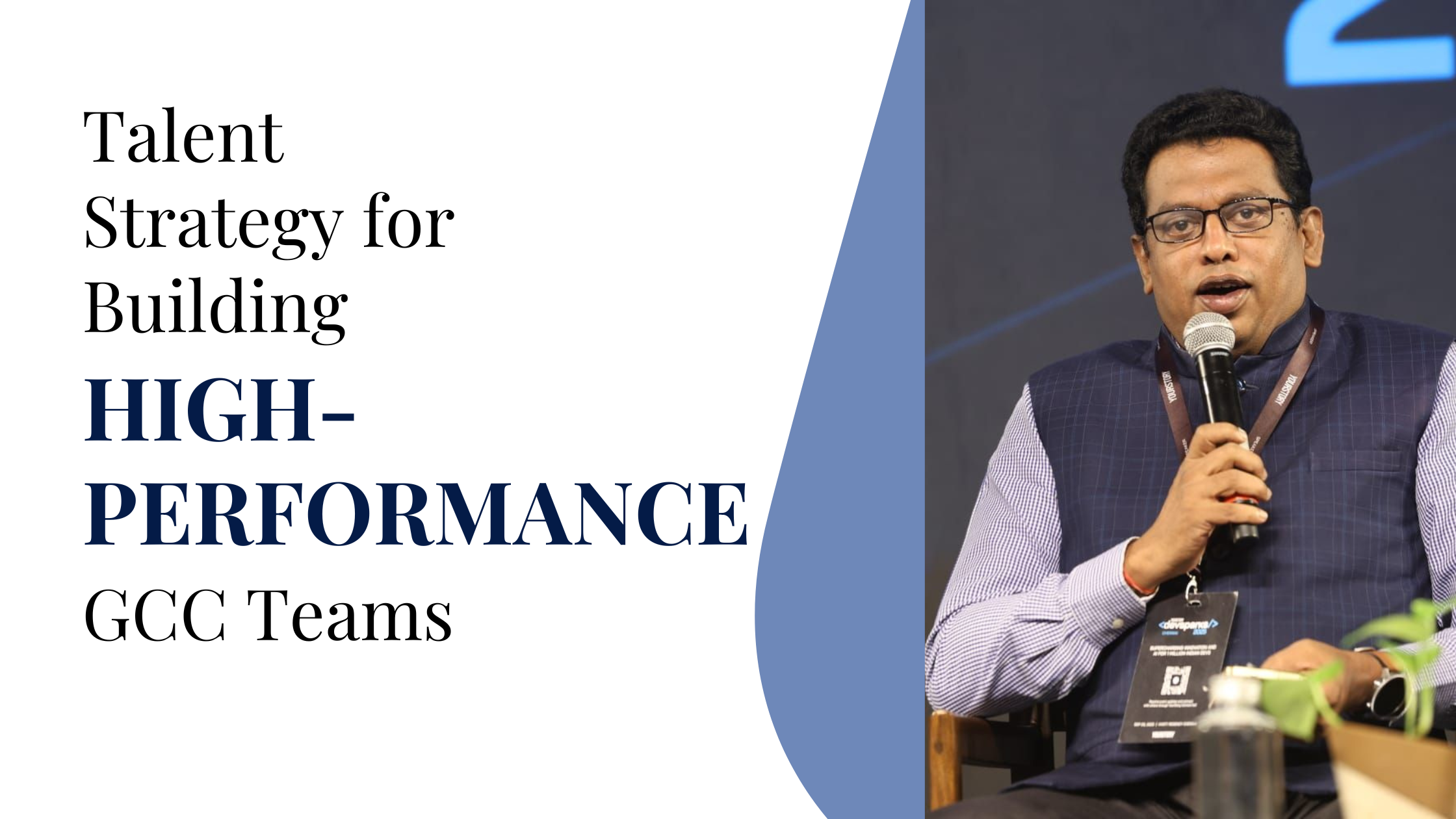
Talent Strategy for Building High-Performance GCC Teams
Introduction
Technology, automation, and AI are transforming Global Capability Centers (GCCs), but talent remains the most critical determinant of success. Organizations often invest heavily in platforms and tools, only to realize that performance gaps stem from misaligned talent strategies.
High-performing GCCs are not built through rapid hiring alone. They are built through intentional talent strategies that align leadership, capabilities, culture, and operating models with enterprise goals.
Why Talent Strategy Is Central to GCC Performance
In the early days, GCC talent strategies focused on:
- Cost efficiency
- High-volume hiring
- Execution-oriented roles
Today, expectations are very different. Modern GCCs are expected to:
- Own complex, business-critical work
- Drive innovation and transformation
- Influence enterprise-wide decisions
- Act as strategic partners to headquarters
This shift requires a fundamentally different approach to talent.
Leadership First: The Foundation of High-Performance Teams
- Take ownership of outcomes, not just delivery
- Build credibility with global stakeholders
- Create a culture of accountability and innovation
- Scale teams without compromising quality
Without the right leadership layer, even the most skilled teams struggle to perform at scale.
Capability-Based Role Design Over Traditional Job Titles
- Clear ownership areas
- Expected business impact
- Growth paths aligned with GCC maturity
This approach improves accountability, engagement, and long-term scalability.
Building a Balanced Talent Pyramid
- Senior experts and architects
- Mid-level specialists
- Early-career professionals
This structure enables faster decision-making, effective mentoring, and sustainable scaling.
Hire for Culture, Develop for Skills
- Ownership mentality
- Problem-solving ability
- Collaboration and adaptability
- Technical upskilling
- Domain knowledge
- Leadership development
Continuous Capability Development as an Operating Model
- Structured learning paths
- Cross-functional exposure
- Internal mobility programs
- Knowledge-sharing platforms
Aligning Talent Strategy with the Operating Model
- Clear ownership structures
- Product- or outcome-aligned teams
- Agile ways of working
- Empowered decision-making
Using Data and AI for Smarter Talent Decisions
- Predict attrition risks
- Improve hiring accuracy
- Optimize workforce planning
- Measure productivity and engagement
Common Talent Pitfalls to Avoid
- Hiring speed over hiring quality
- Treating GCC roles as back-office careers
- Underinvesting in leadership development
- Measuring success only through cost metrics
- Lack of clear growth paths
What High-Performance GCC Teams Look Like in Practice
- Strong ownership and accountability
- High engagement and low attrition
- Faster decision-making
- Continuous innovation
- Trusted partnerships with global leadership
Final Thoughts
High-performance GCC teams are built intentionally, not accidentally.
A strong talent strategy—rooted in leadership, capability design, culture, and continuous development—forms the foundation of sustainable GCC success.
Enterprises that get talent right unlock innovation, resilience, and long-term competitive advantage.